25 Best Vintage Calligraphy Fonts for 2026
Vintage Calligraphy Fonts span delicate monoline scripts, high-contrast penmanship, heavy retro lettering, and even angular display forms. Their practical roles range from wedding stationery and product labels to logos, posters, social graphics, and short headline treatments, with scale and readability determining the best fit.
Looking for more calligraphy fonts? Browse our complete Calligraphy Fonts collection to compare modern, elegant, bold, wedding, and logo-friendly calligraphy styles.
Vintage Calligraphy Fonts
Vintage Calligraphy Fonts in this group emphasize connected construction, high contrast, slanted rhythm, and prominent flourishes. They are generally more ornamental and invitation-focused than the lighter handwritten scripts or heavier display outliers.
Vintage Calligraphy Font
Best For: packaging, display text, short phrases, invitations
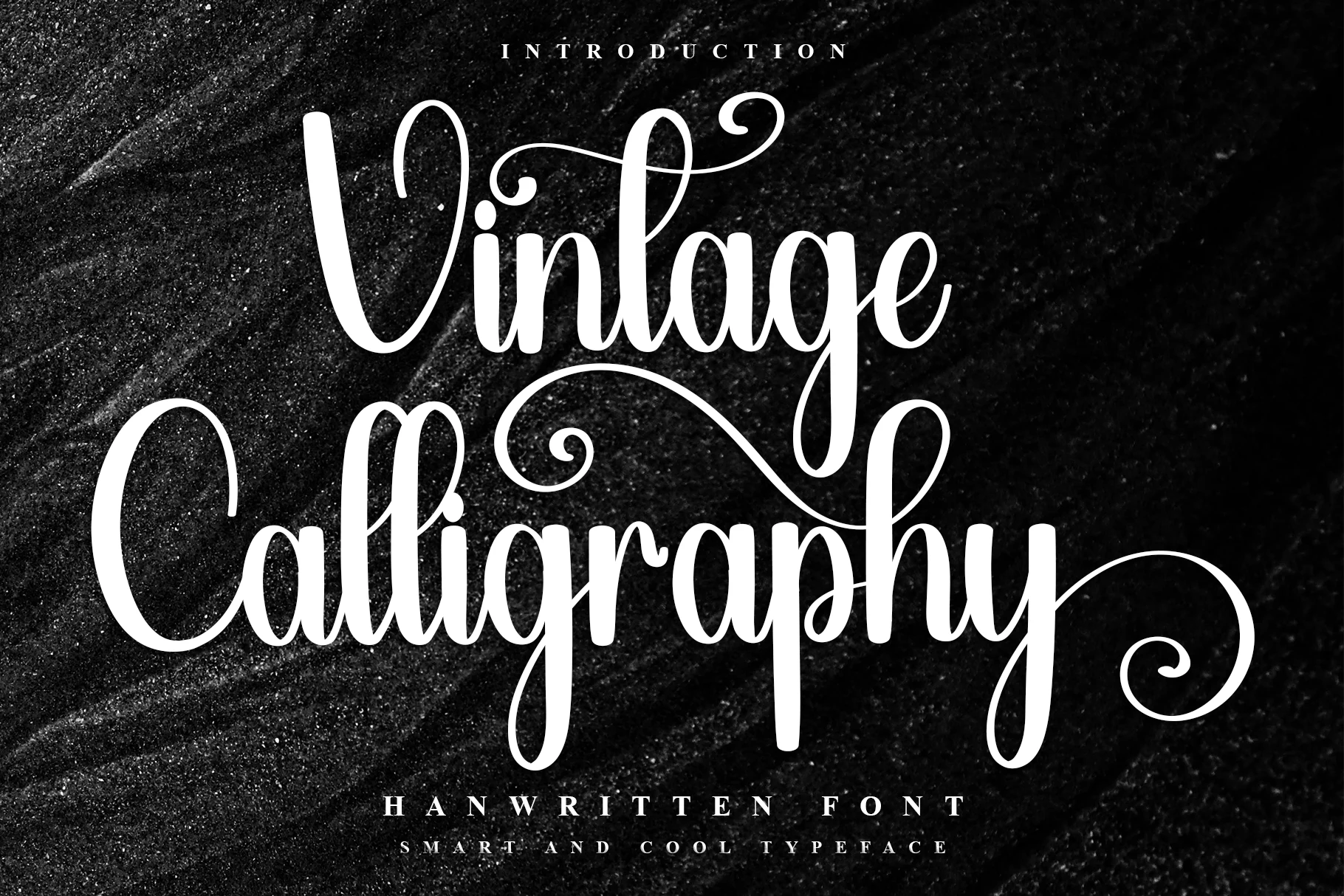
Vintage Calligraphy Font combines high contrast with connected cursive forms, mixed slant variations, and pronounced swashes. Its decorative old-world presence suits labels, cards, invitations, and other short phrases, but those flourishes can compromise clarity at small sizes.
Youngboy Font
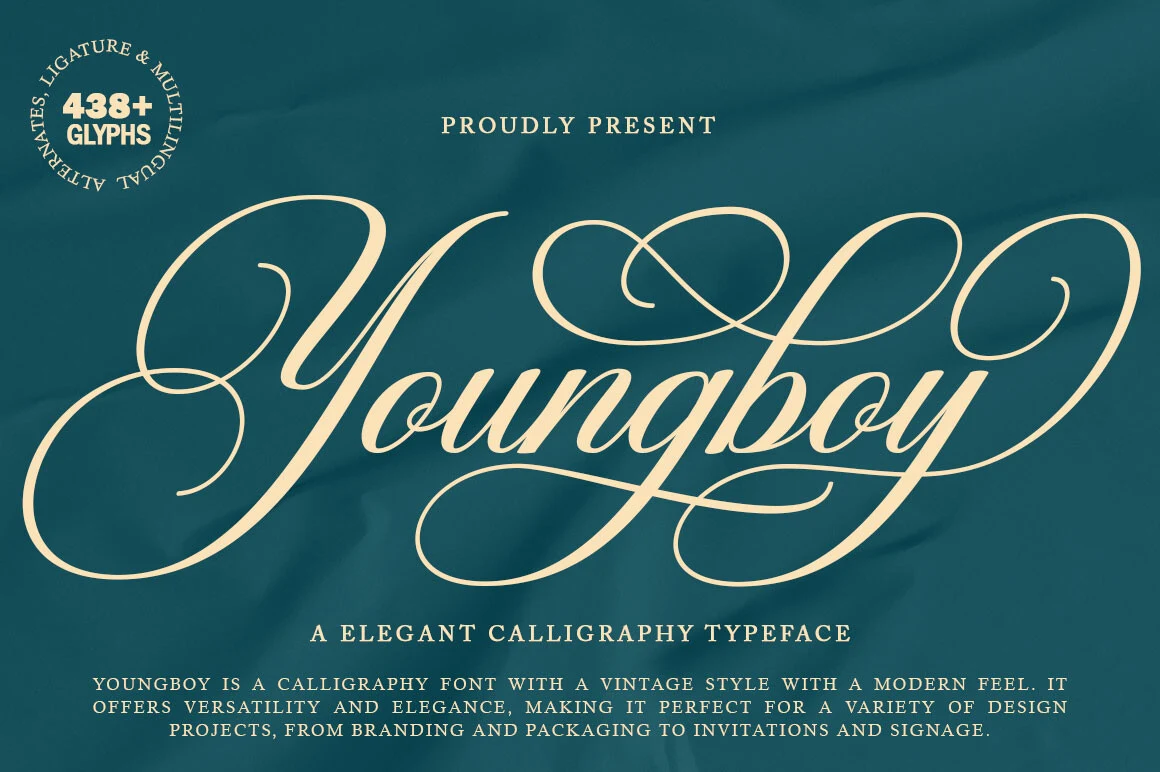
Best For: branding, packaging, invitations, signage
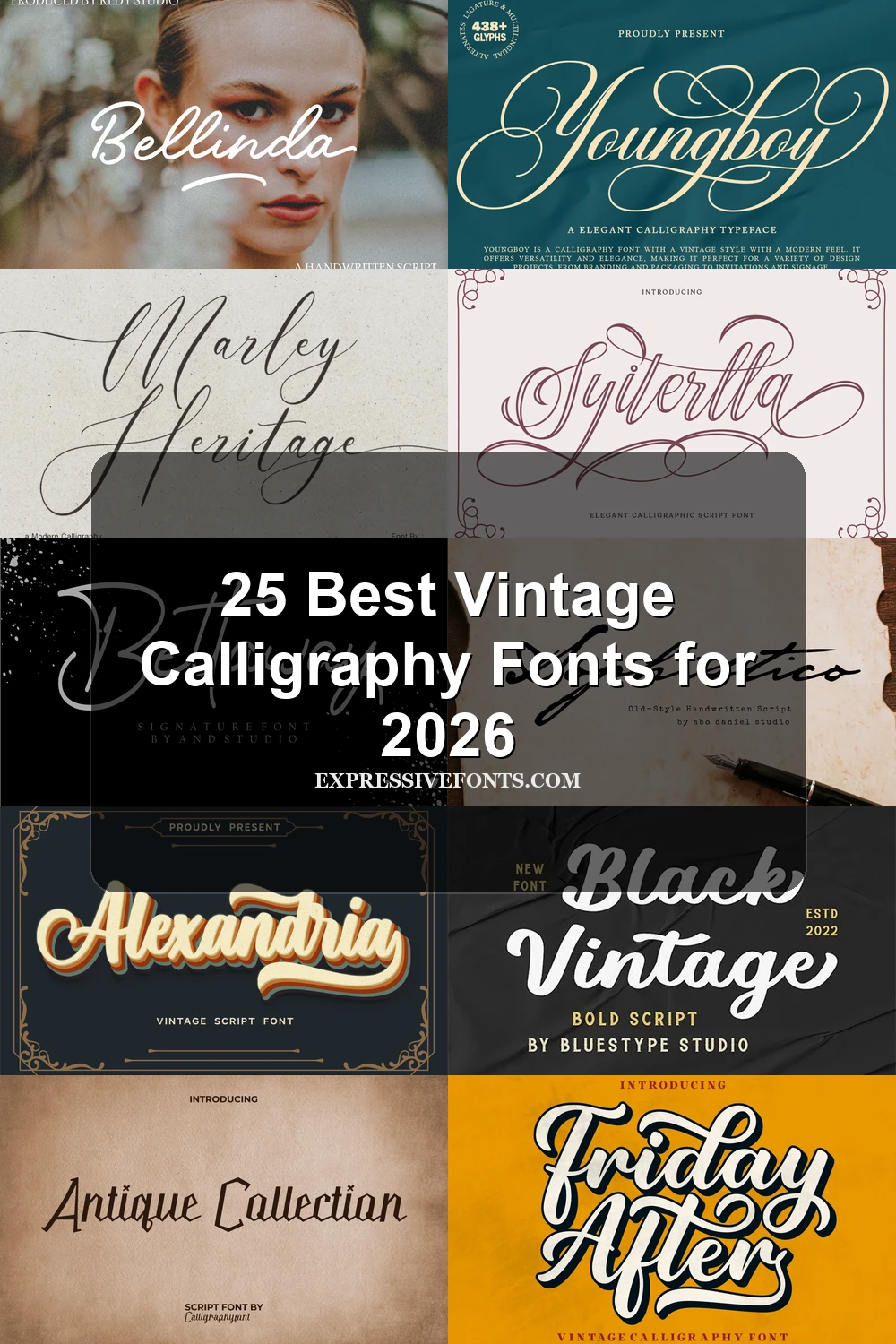
Youngboy Font establishes a controlled direction through its consistent right-leaning rhythm, high contrast, and sweeping terminal flourishes. The interconnected lettering feels ornate without losing its shape at display scale, making it a stronger choice for branding, packaging, signage, and brief invitation wording than dense text.
Sophistico Font
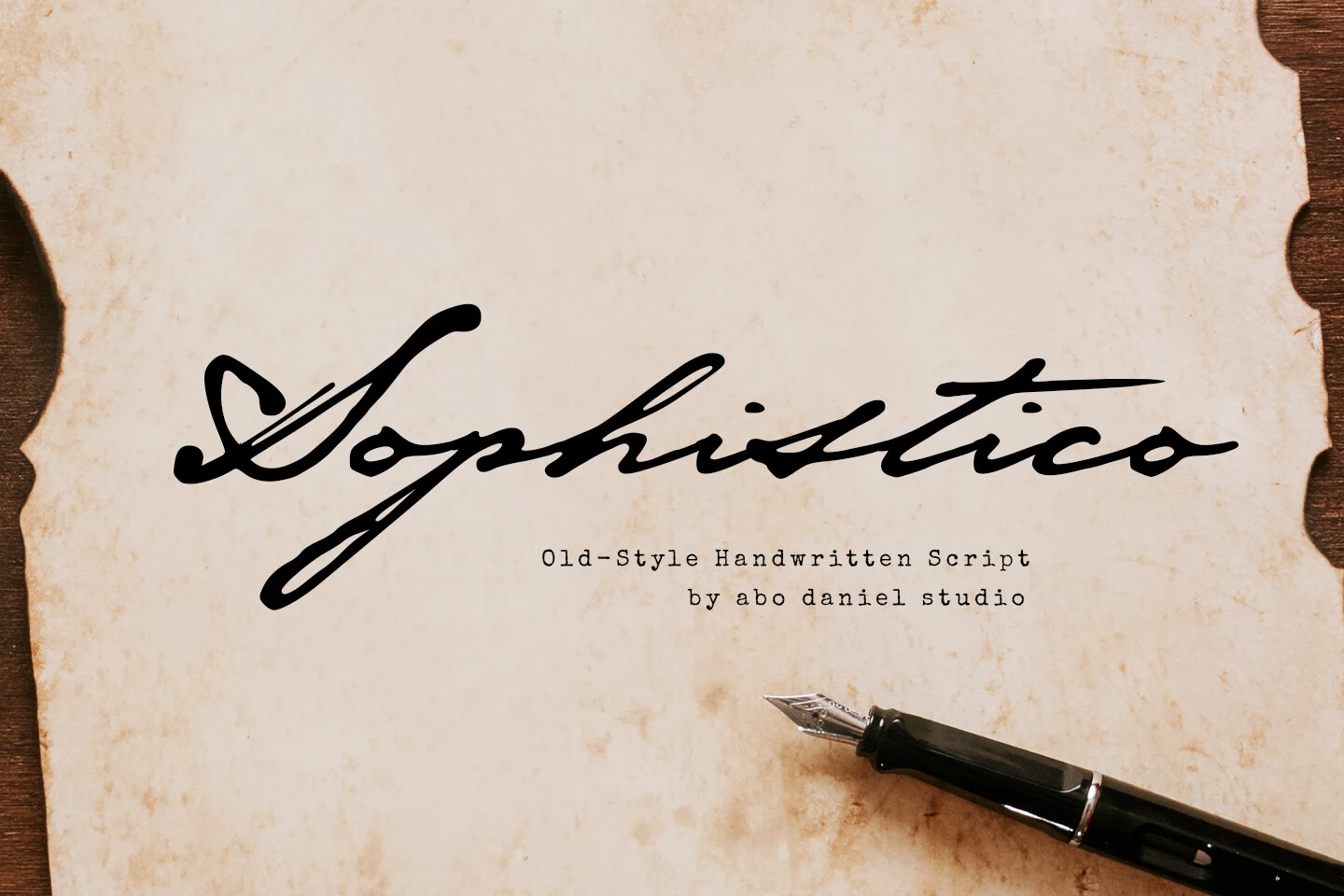
Best For: headlines, invitations, wedding designs, elegant designs
Sophistico Font reads as early-20th-century penmanship through high thick-thin contrast, a rightward slant, connected forms, and the specially emphasized initial S. Its opening swash gives headlines and invitations a distinctive Vintage Calligraphy Fonts treatment, while the intricate structure is best reserved for short display lines.
Meighan Script Font
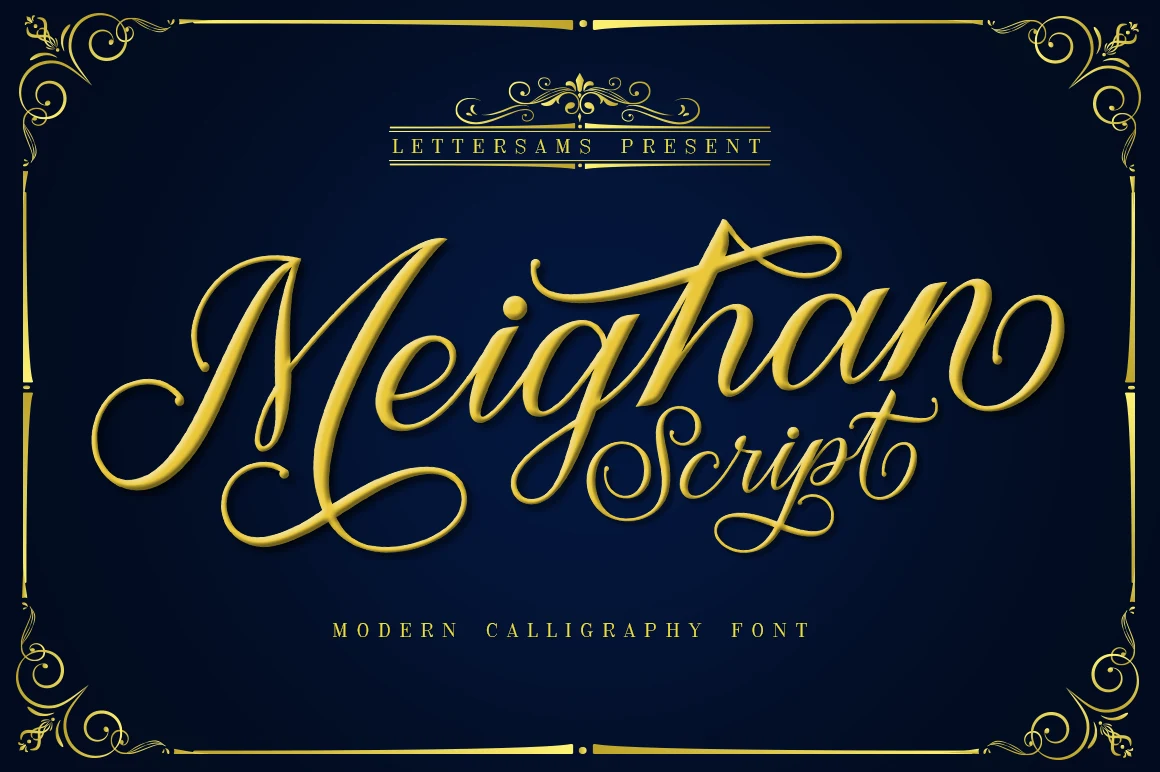
Best For: logos, product labels, wedding designs, posters
Meighan Script Font bridges Vintage Calligraphy Fonts and contemporary branding with thick elegant strokes, a pronounced right slant, and extended swashes. It can headline logos, product labels, posters, wedding designs, and letterhead, provided the lettering has enough room for its flourishes to remain distinct.
Miraclin Font
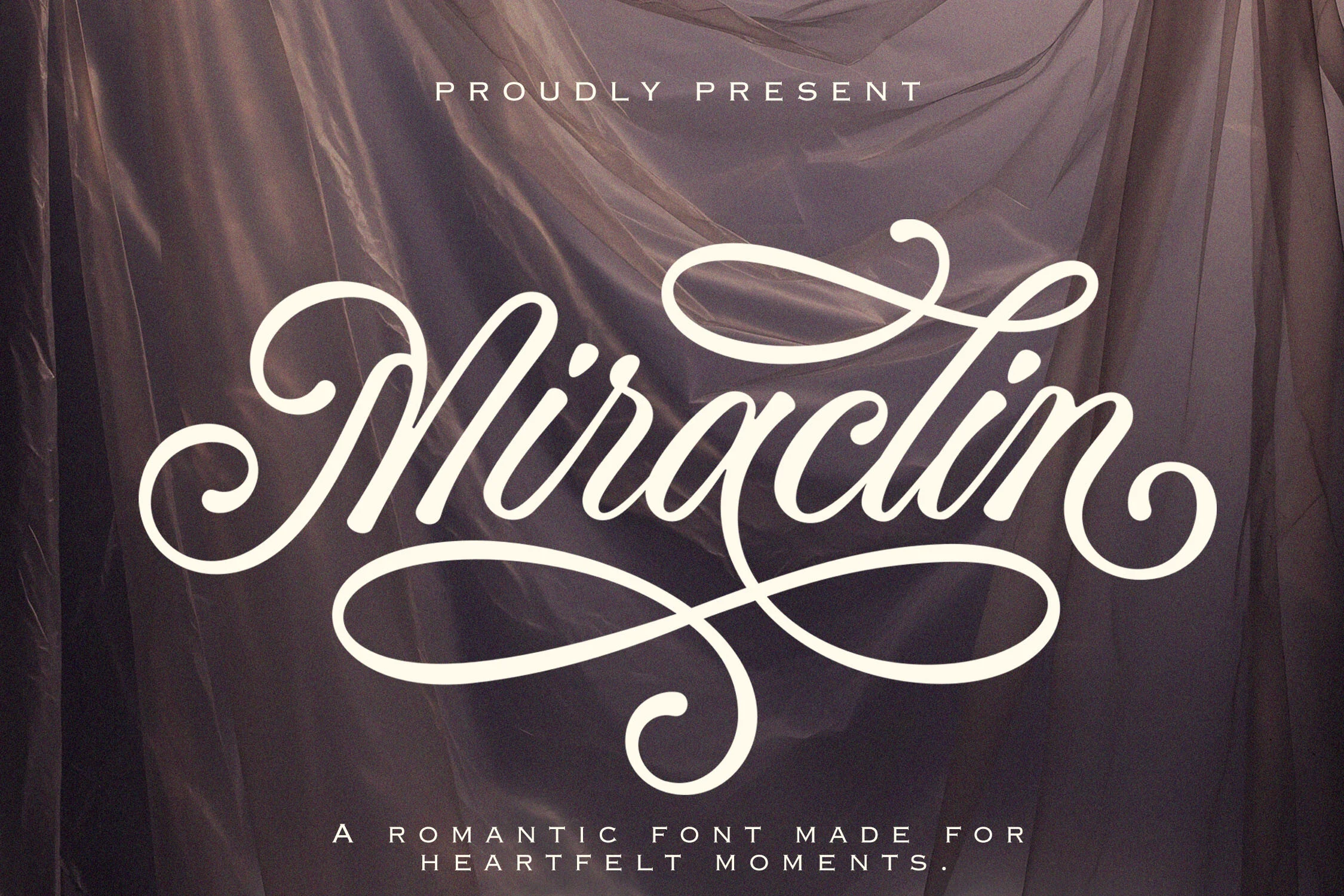
Best For: invitations, wedding designs, quotes, display text
Miraclin Font is defined by dramatic sweeping curves, high contrast, and decorative swashes that point directly toward invitation work. Its connected loops can carry names, quotes, and other brief display wording effectively, but reduction quickly erodes the letter shapes.
Vintage Calligraphy Font
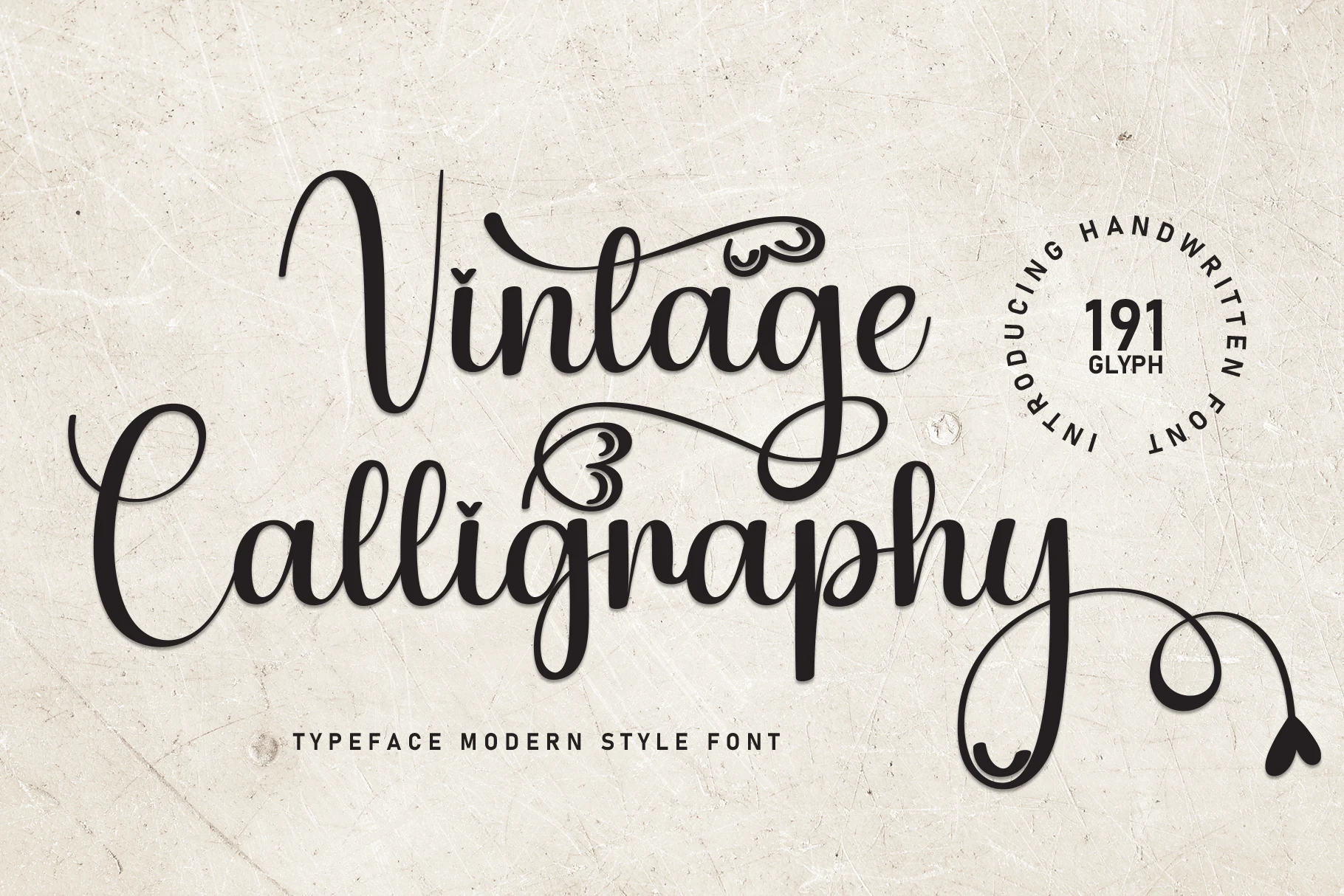
Best For: invitations, wedding designs, romantic designs
Vintage Calligraphy Font suits wedding-focused lettering through dramatic loops, high contrast, and thin connecting strokes that create a personalized invitation rhythm. It reads well at invitation scale and can carry brief romantic wording, but those fine connections become fragile when the design is reduced.
Marley Heritage Font
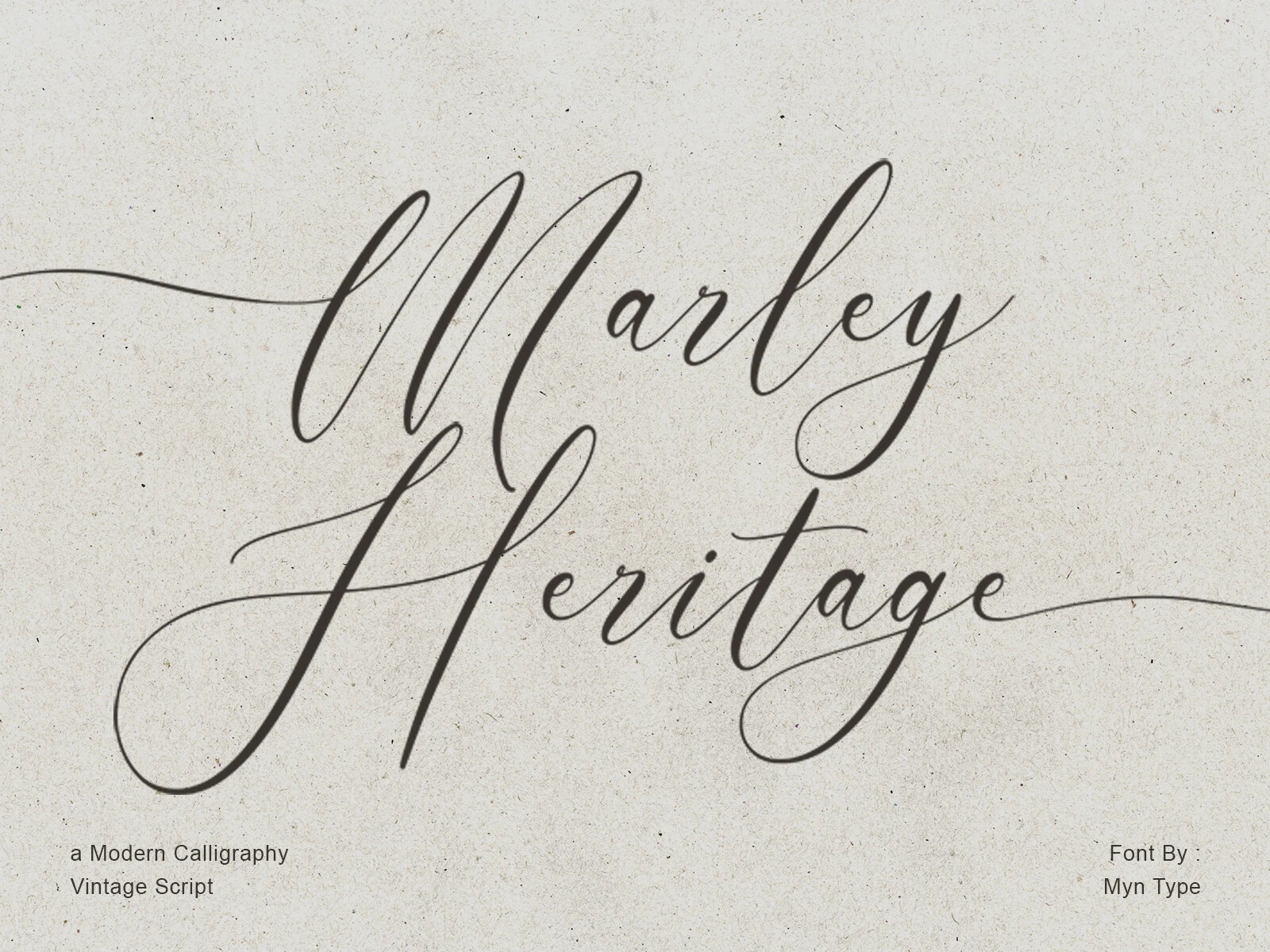
Best For: logos, branding, wedding designs, social media graphics
Marley Heritage Font builds its Vintage Calligraphy Fonts character from thin line strokes, a pronounced slant, and elongated lead-in and terminal swashes. It works across logos, branding, wedding designs, and social media graphics, though high contrast and flourishes reduce readability once the lettering becomes small.
Syiterlla Outline Font
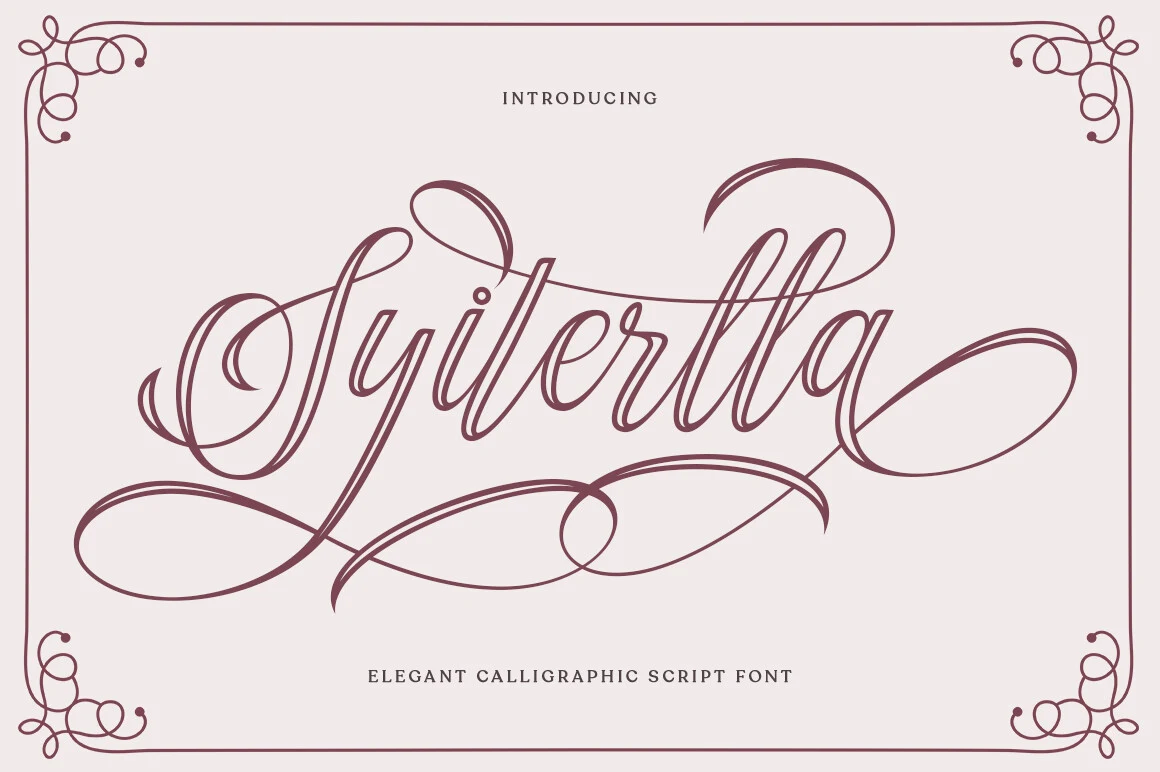
Best For: invitations, wedding designs, logos, short phrases
Syiterlla Outline Font is designed for short lettering that benefits from high contrast, connected forms, swashes, ligatures, and alternate characters. Those extra glyph options can distinguish logos, wedding designs, and invitations, but the flourishes still require large sizing for the customized details to remain legible.
Vintage Millenia Font
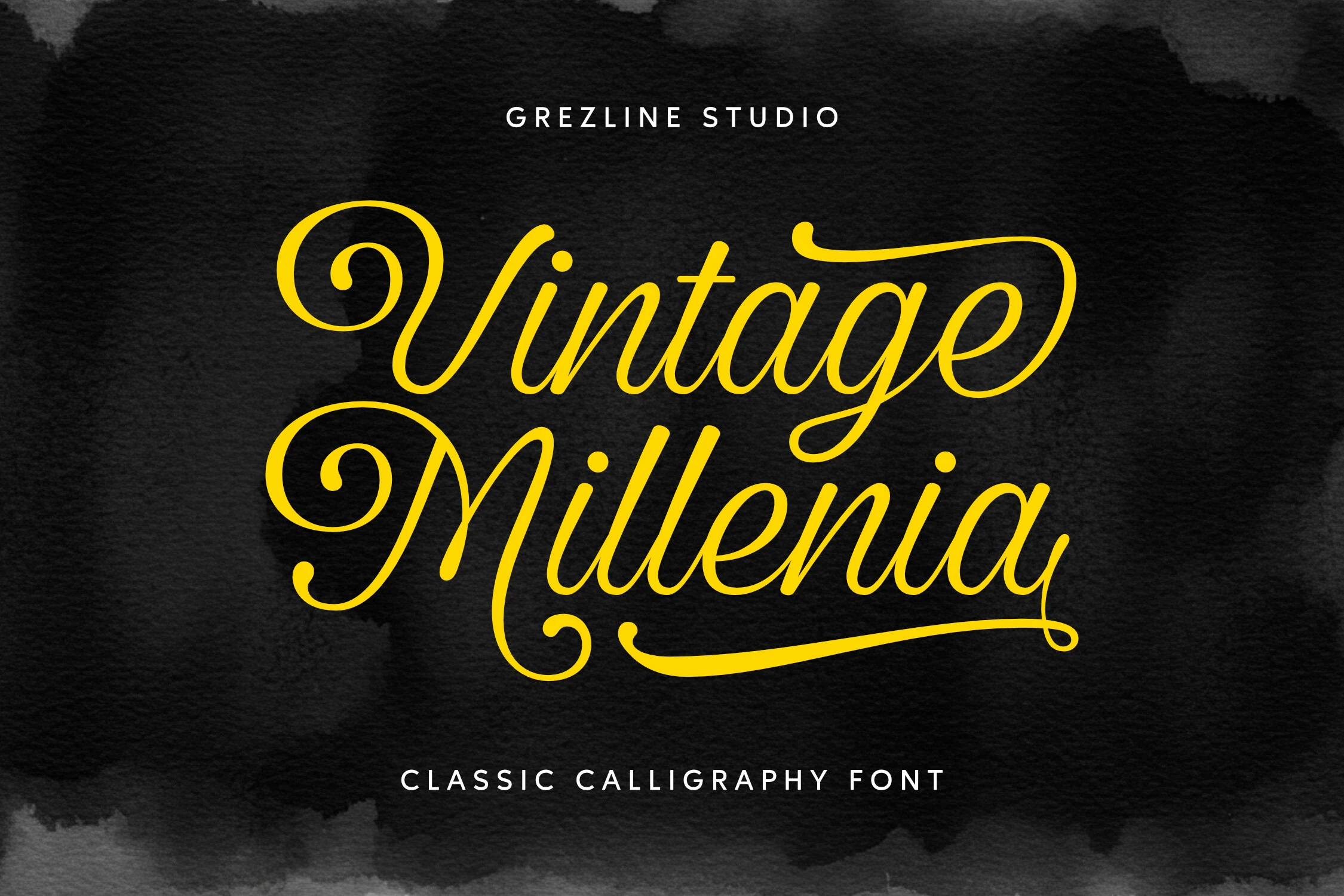
Best For: invitations, wedding designs, logos, headlines
Vintage Millenia Font combines exaggerated loops, rounded terminals, high contrast, and a stable baseline. That steadier alignment keeps headlines, logos, invitations, and wedding designs controlled even as the connected strokes add ornament. The interlinked forms remain too complex for body text.
The Bringhton Font
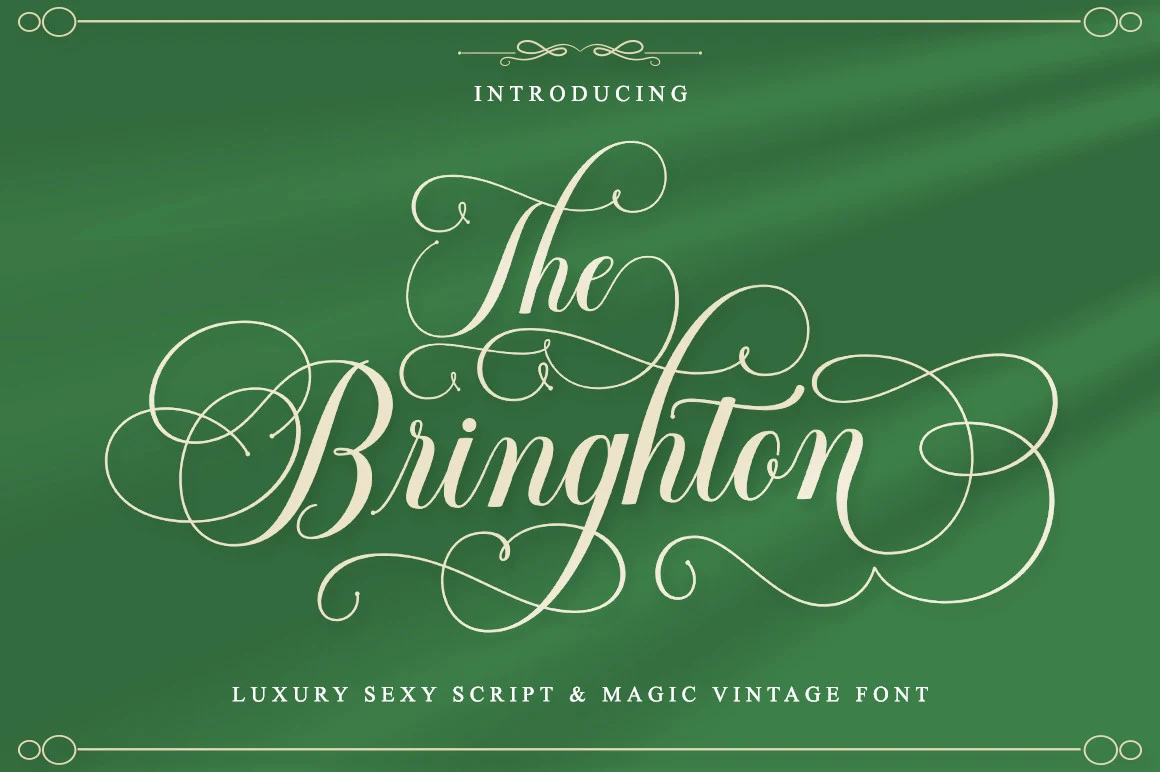
Best For: wedding designs, luxury designs, invitations, display text
The Bringhton Font pushes Vintage Calligraphy Fonts toward ornamental display lettering with high contrast, expansive swashes, and highly detailed connected construction. It can carry wedding designs and invitations with authority, but the accumulated detail significantly reduces readability when scaled down.
Saverny Font
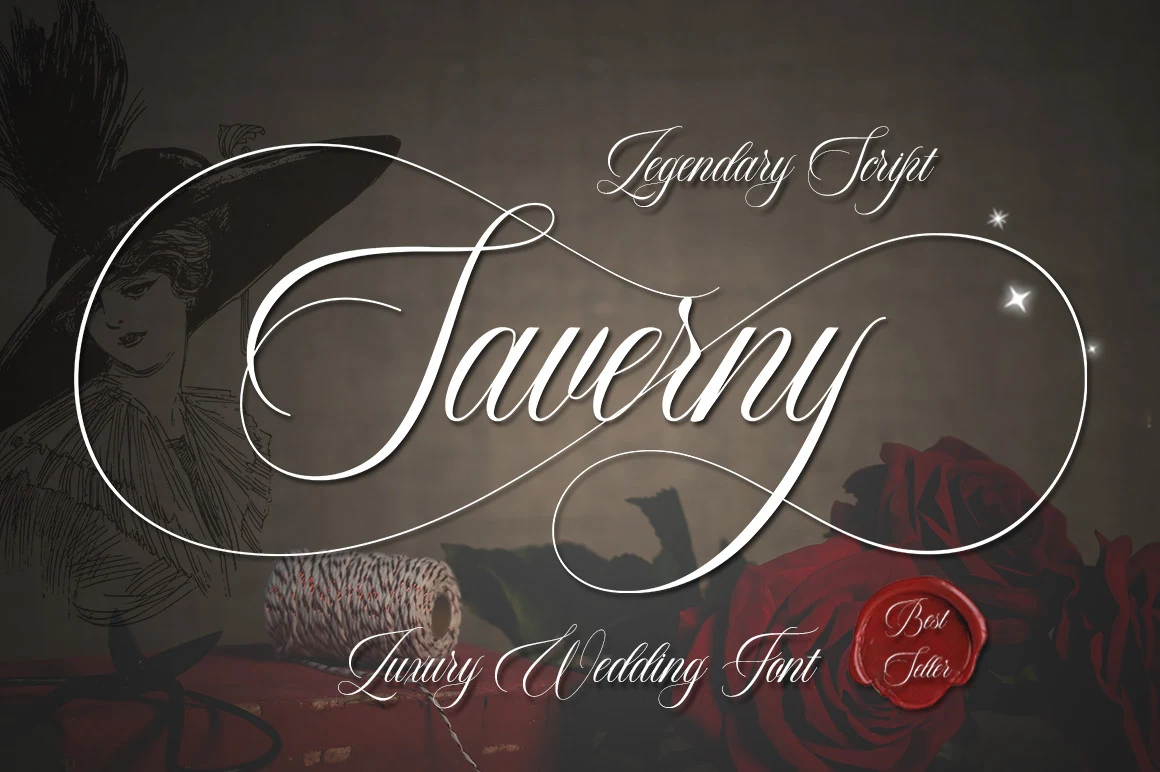
Best For: logos, invitations, product labels, romantic designs
Saverny Font gives Vintage Calligraphy Fonts an expansive label-and-invitation presence through wide spacing, strong thick-thin contrast, extended loops, and a rightward slant. Short names stand out on logos and product labels, while its dramatic swashes rule out small text and dense supporting copy.
Friday After Font
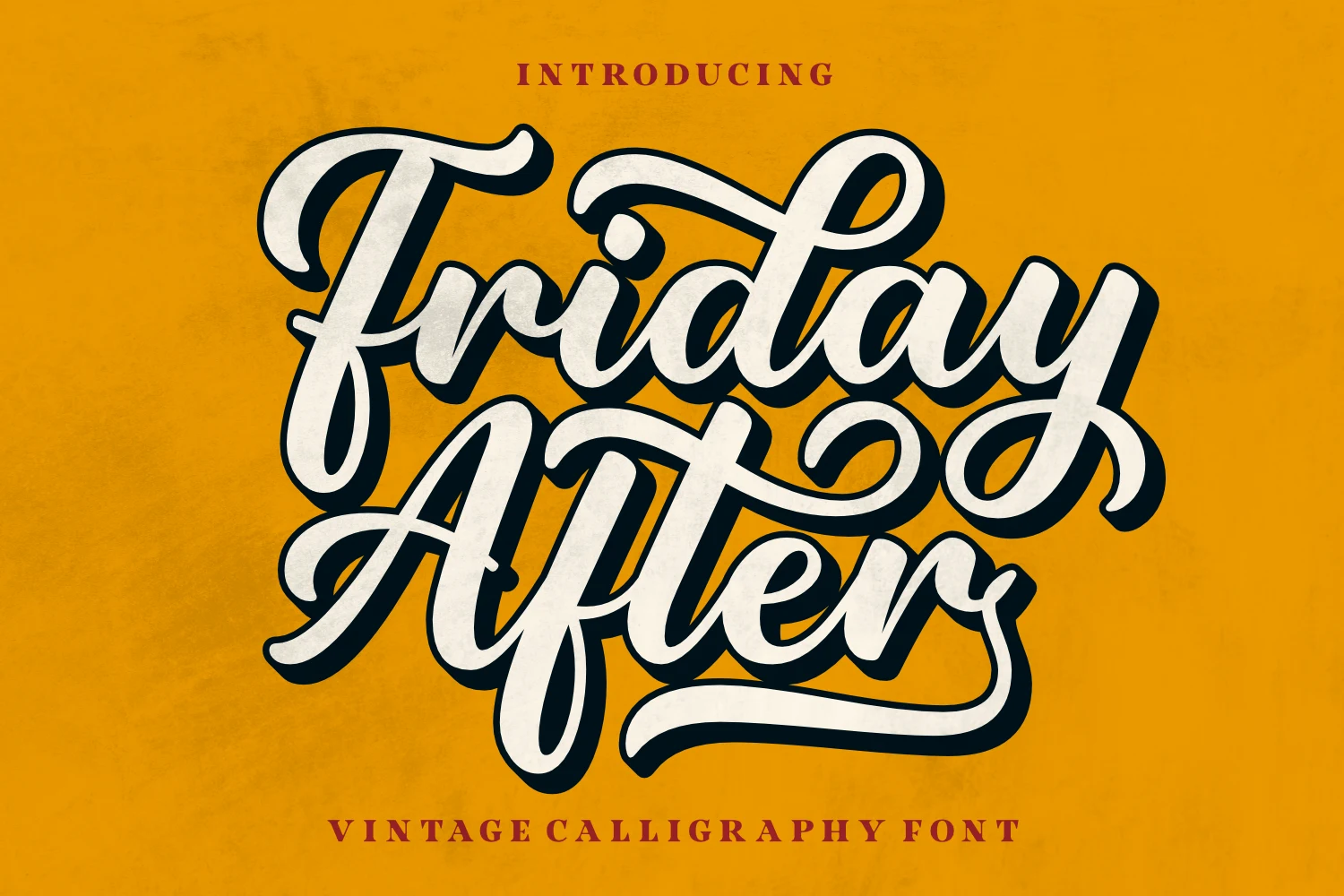
Best For: invitations, display text, quotes, vintage designs
Friday After Font uses heavy contrast, a rightward slant, connected forms, and overlapping decorative loops for short vintage-themed display work. The overlap adds character to invitations, quotes, and greeting cards, but it makes long-form reading and reduced-size applications problematic.
Flowing Handwritten Scripts
These flowing handwritten scripts rely on monoline or lightly modulated strokes, relaxed baselines, and casual movement. Compared with the other groups, they feel less ceremonious, though swashes and texture still favor display sizing.
Batherly Font
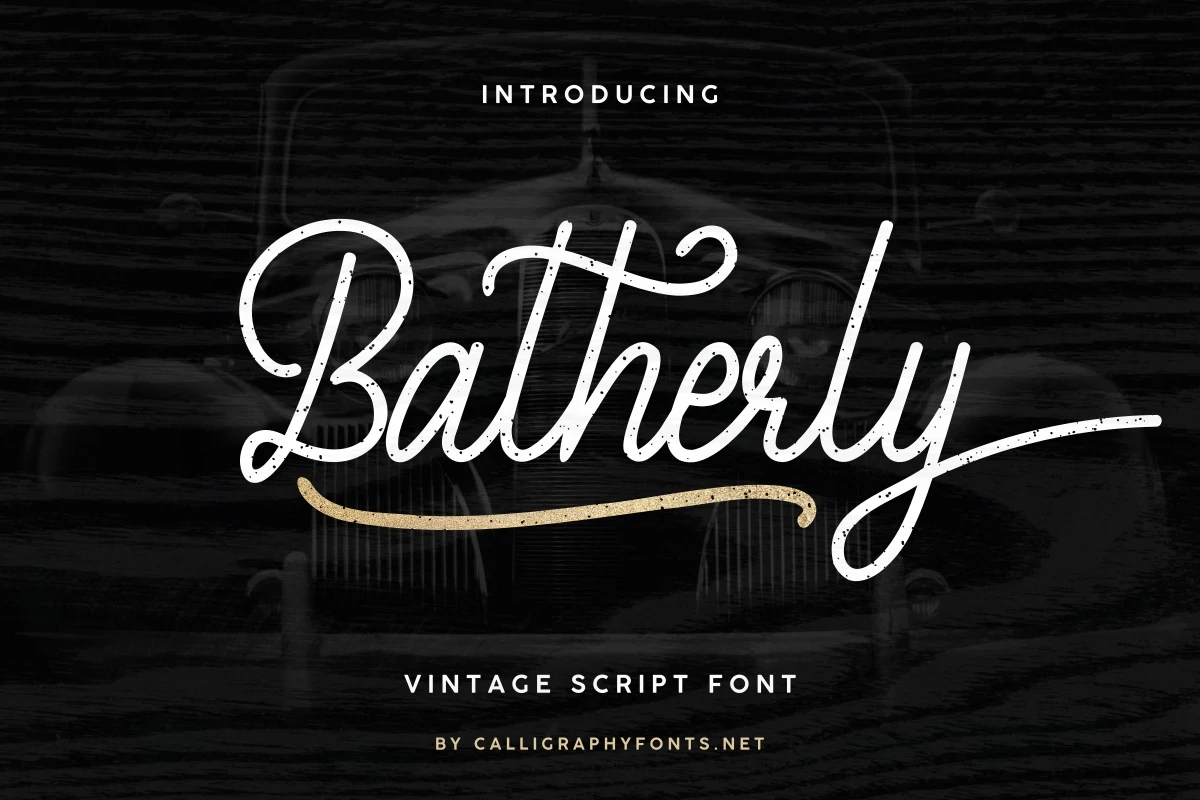
Best For: logos, branding, invitations, wedding designs
Batherly Font is useful when a project needs a relaxed handwritten flow rather than formal penmanship. Its connected monoline strokes, subtle modulation, varying baseline, terminal tails, and supplied alternates create room for logo customization. Keep it to large titles, branding, invitations, or wedding designs, since dense paragraphs and small text can lose clarity.
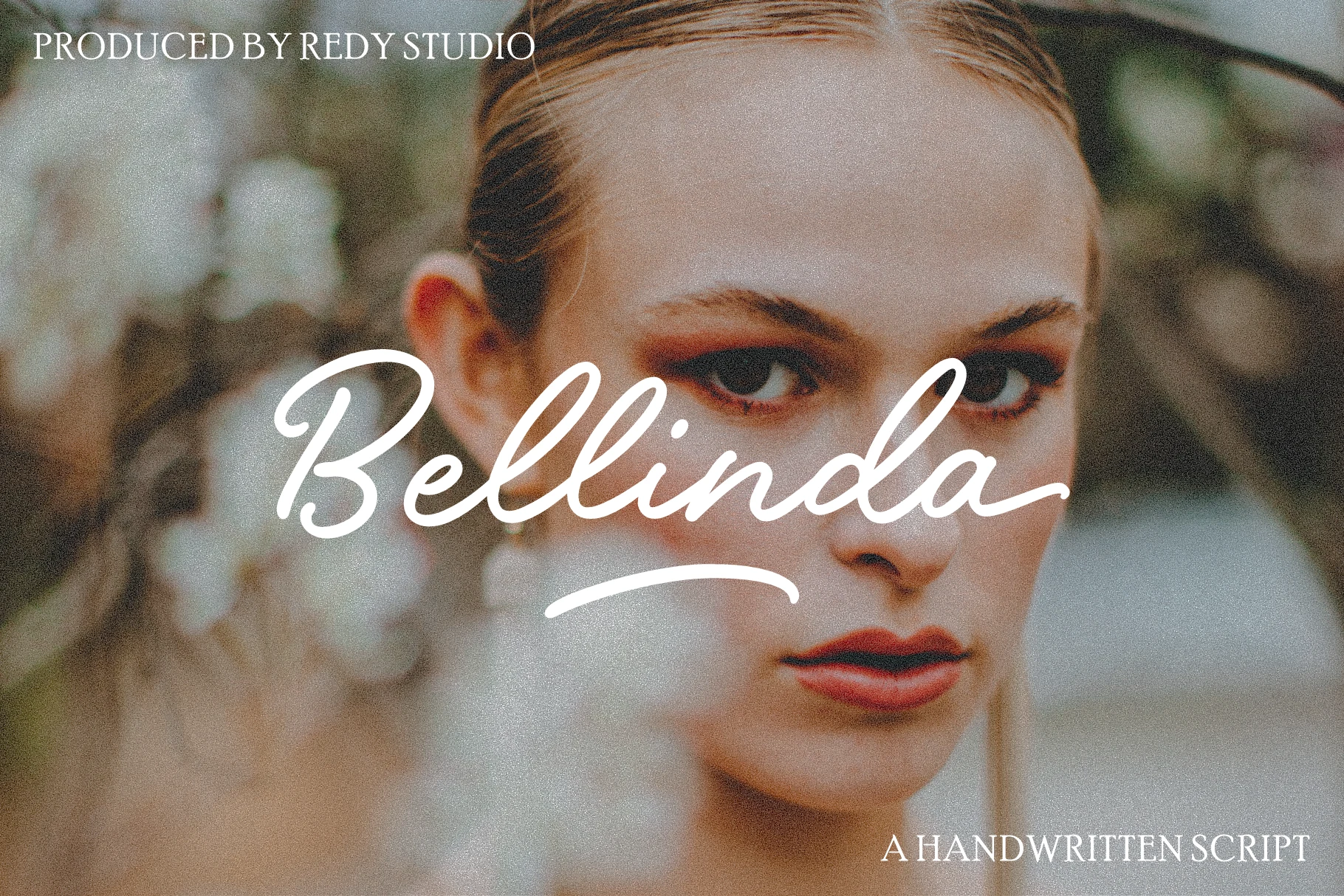
Bellinda – Modern Calligraphy Font
Best For: logos, branding, invitations, short phrases
Bellinda – Modern Calligraphy Font is built from delicate monoline strokes with slight variation and a prominent underline-like swash beneath its final letters. That signature finish works especially well for logos, branding, invitations, and short phrases. Although its open construction helps titles, very small text loses definition.
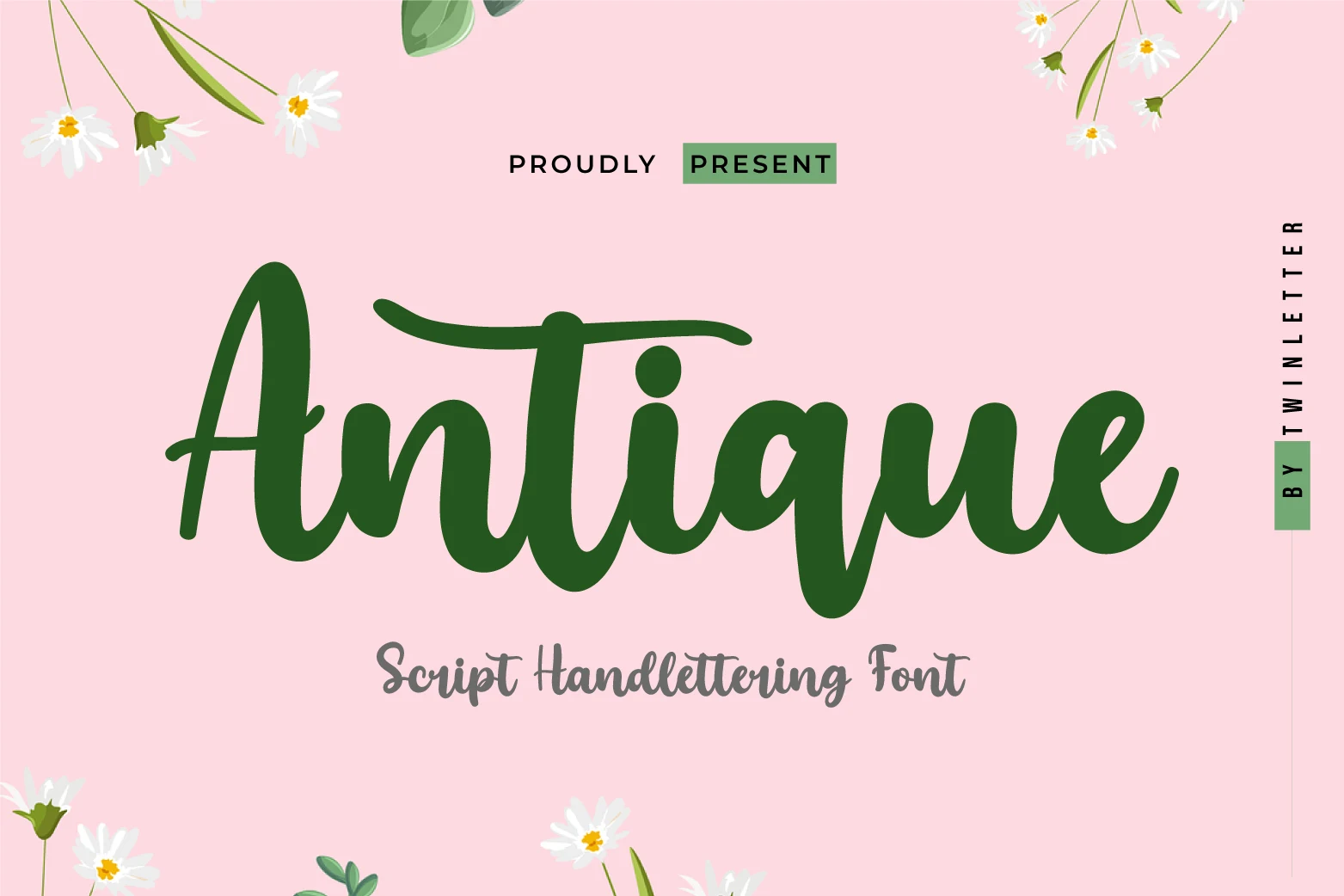
Antique Font
Best For: social media graphics, display text, short phrases, playful designs
Antique Font softens connected writing with rounded terminals, a slight forward slant, and restrained thick-to-thin transitions. The result feels casual rather than ceremonially formal and remains readable in larger social graphics or short phrases. Decorative curves can still crowd compact wording, so it belongs mainly in display applications.
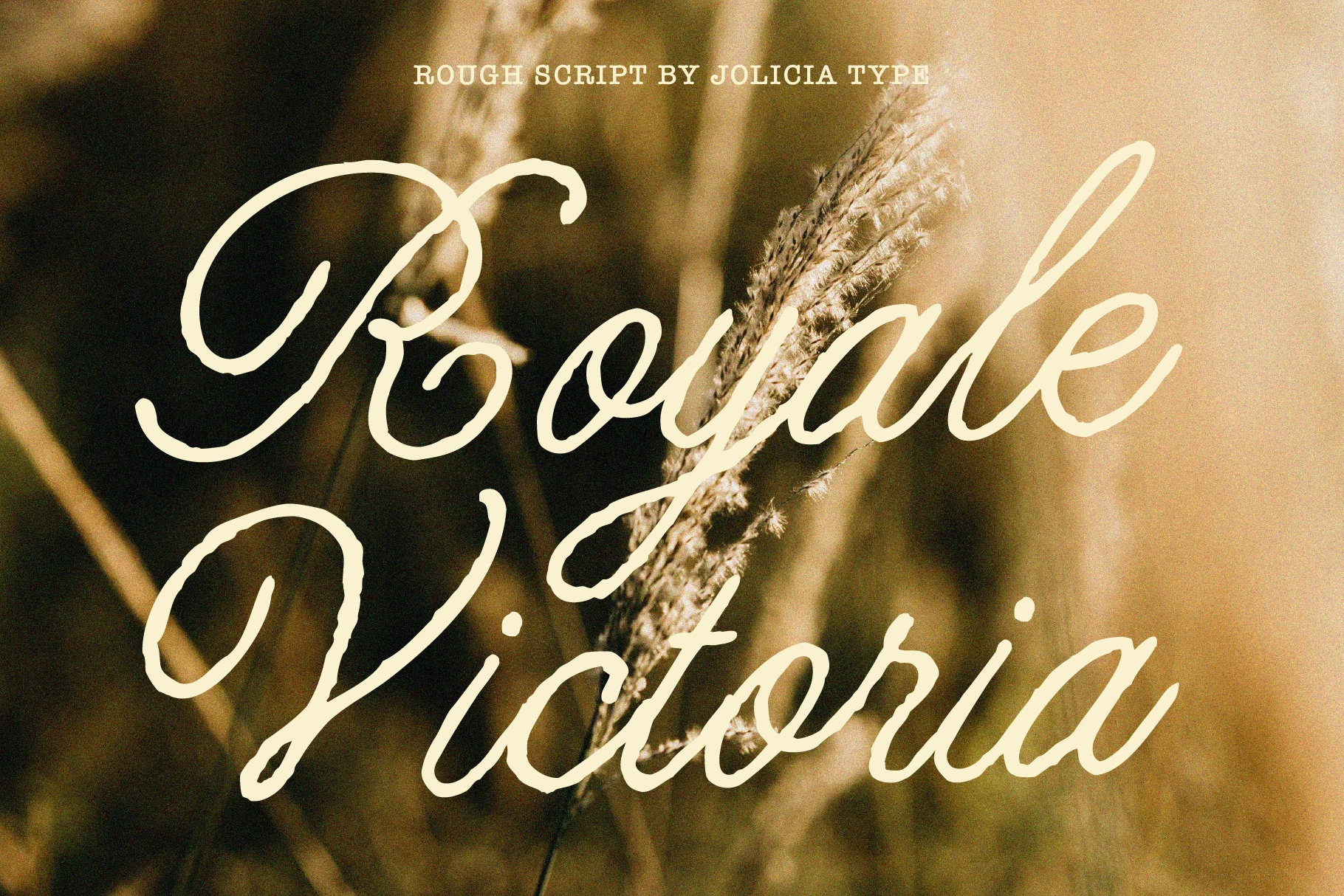
Royale Victoria Font
Best For: logos, branding, packaging, wedding designs
Royale Victoria Font keeps a mostly monoline connected structure but interrupts it with rough-edged texture and organic stroke variation. That rustic surface is most effective at display scale, where it can support logos, branding, and packaging without the texture obscuring the letter connections.
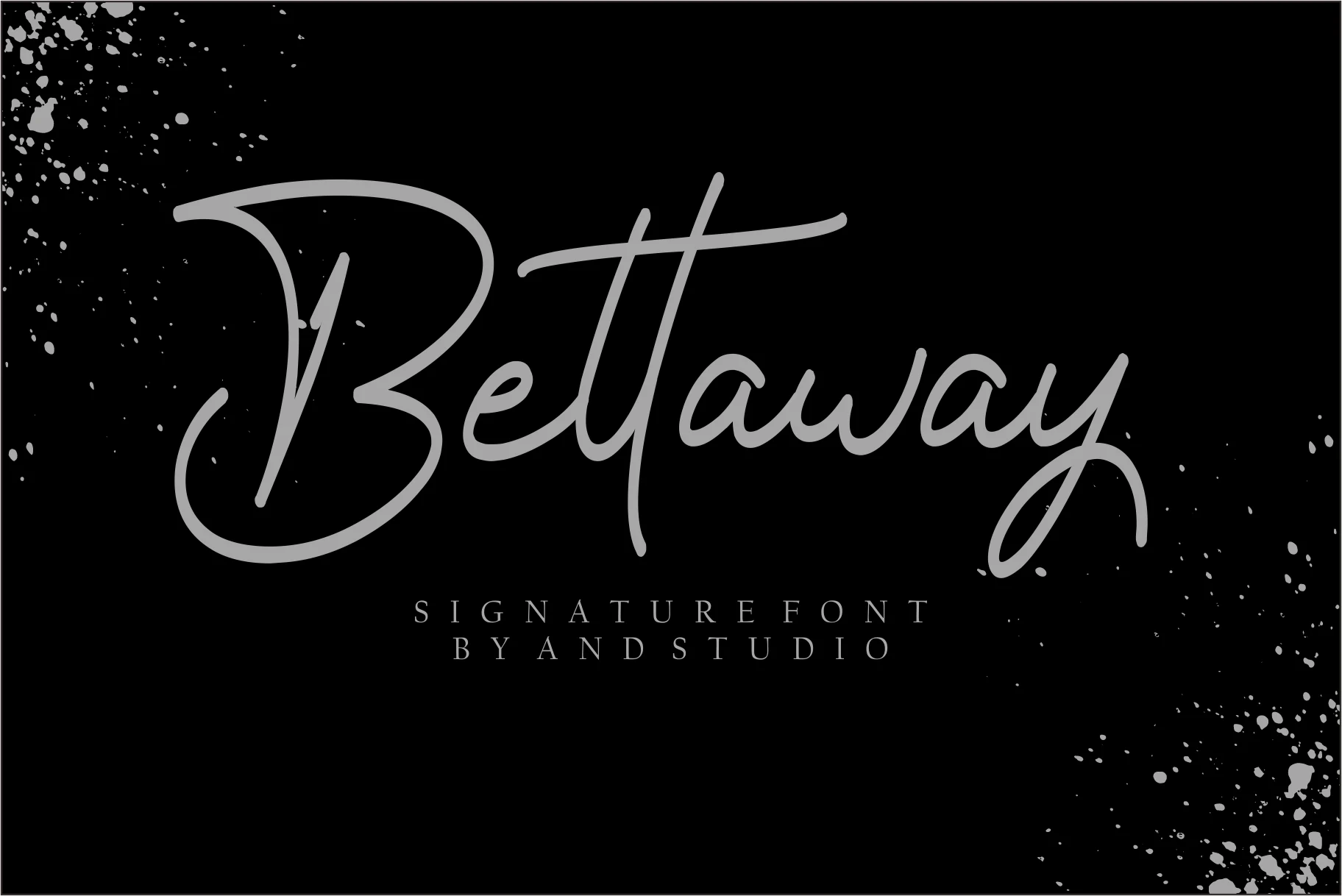
Bettaway Font
Best For: luxury designs, high-end designs, branding, packaging
Bettaway Font resembles a handwritten signature through exaggerated ascenders, descenders, sweeping curves, thin strokes, and an irregular baseline. That stylization gives branding, packaging, and high-end designs a distinctive personal mark, but it needs large display treatment rather than compact supporting text.
Butter Milky Font
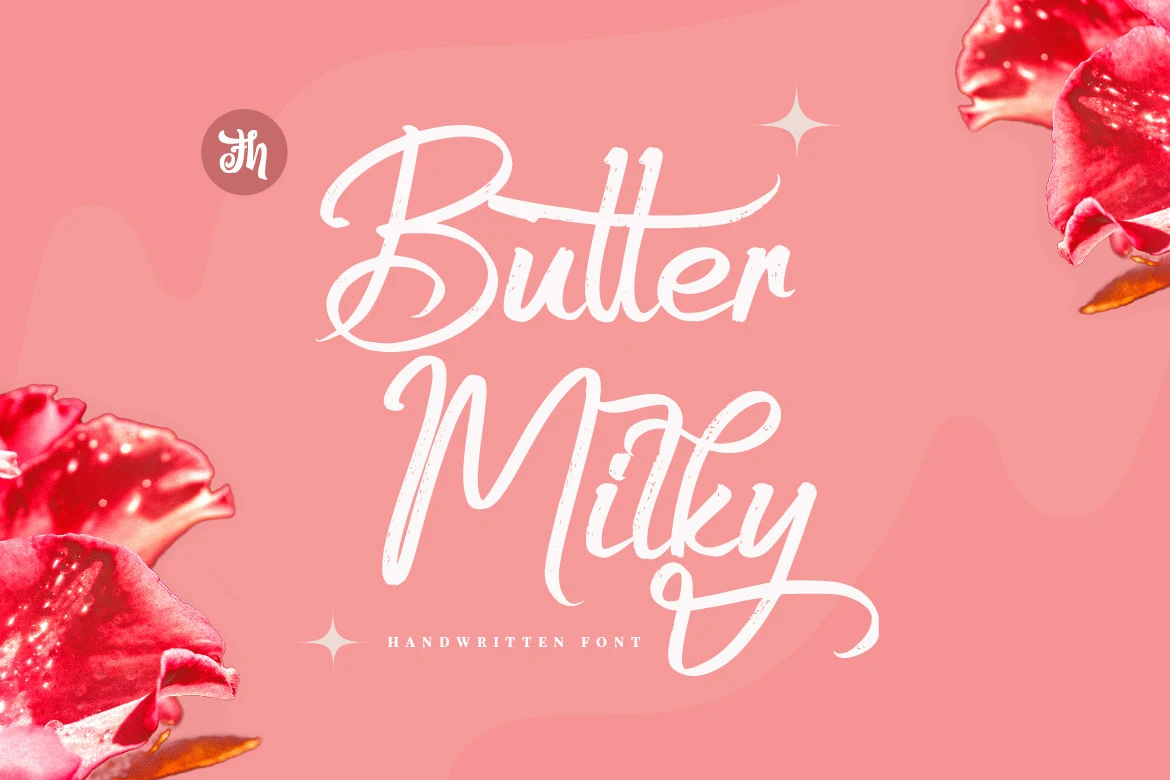
Best For: logos, T-shirts, branding, creative projects
Butter Milky Font introduces movement through an undulating baseline and extended lowercase swashes rather than disciplined alignment. Its connected lettering suits logos, T-shirts, branding, and creative projects, while the shifting rhythm makes long-form reading difficult and favors large, short display phrases.
Bold And Distinctive Display Scripts
This group prioritizes visual force or structural distinction, using heavy strokes, layered effects, retro proportions, or angular disconnected forms. It delivers stronger poster and logo impact than the more delicate calligraphic categories.
Bettafly Font
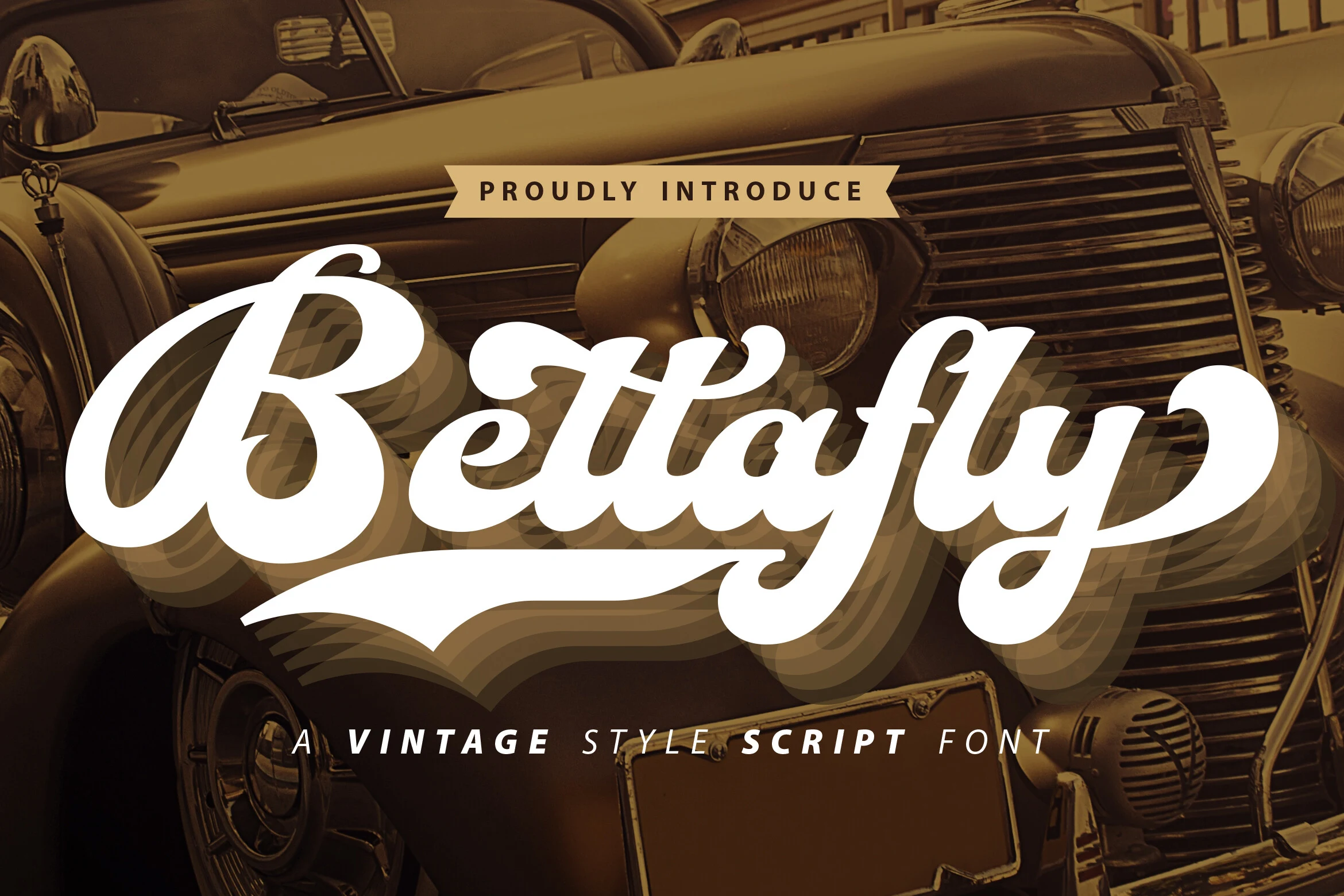
Best For: social media graphics, invitations, quotes, display text
Bettafly Font uses heavy connected strokes to give calligraphic lettering more visual force than a delicate script. The extended tail on its final y supplies a recognizable finishing mark, and its weight holds up well in social media graphics, quotes, invitations, and other large display text rather than body copy.
Rushine Font
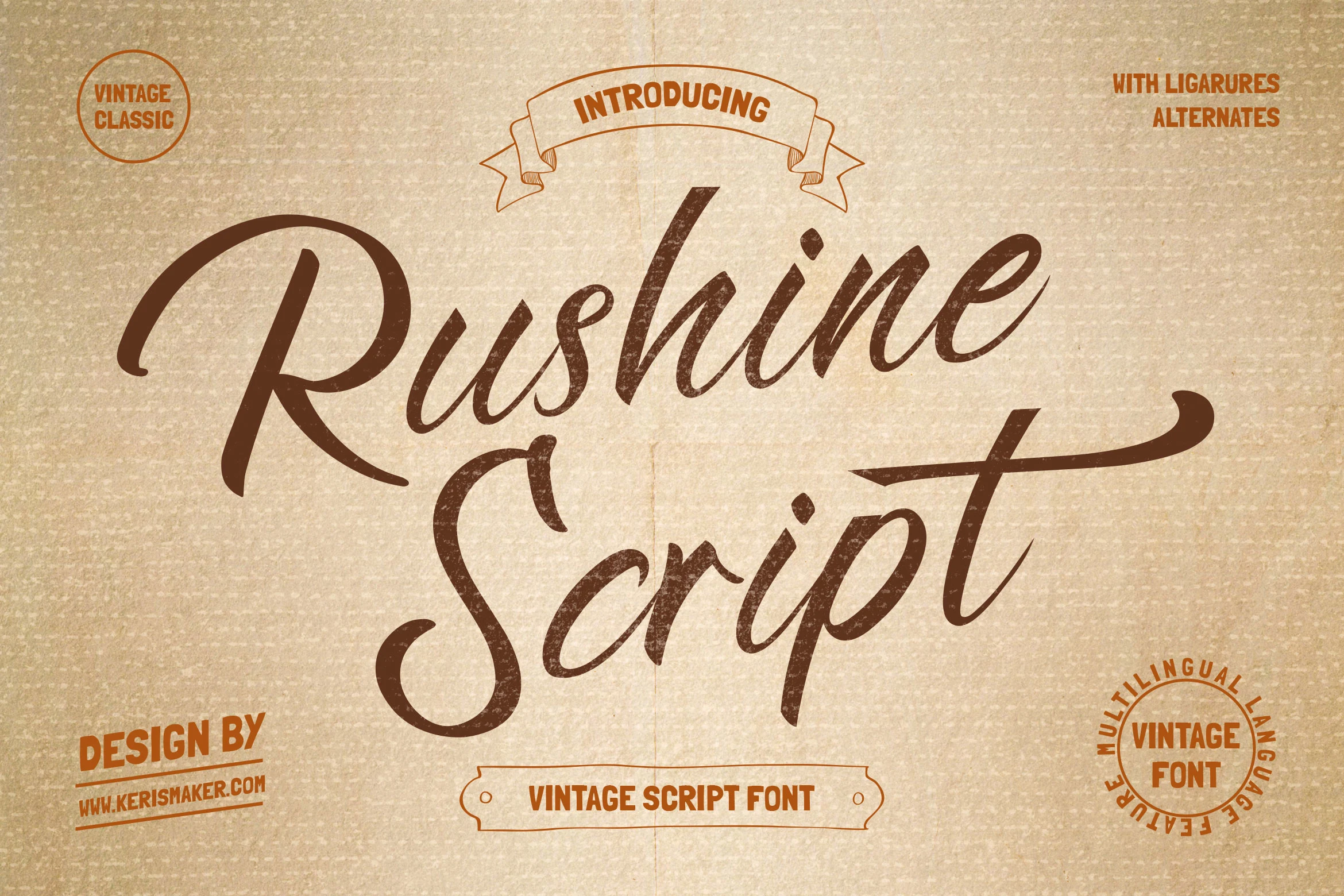
Best For: logos, social media graphics, book covers, display text
Rushine Font brings brush-derived contrast and distressed texture to right-slanting connected lettering. The worn surface and intricate joins are clearest on large logos, social graphics, book covers, and titles. Its supplied use as a secondary font with sans or serif typefaces also makes pairing a practical part of the design.
Mashally Font
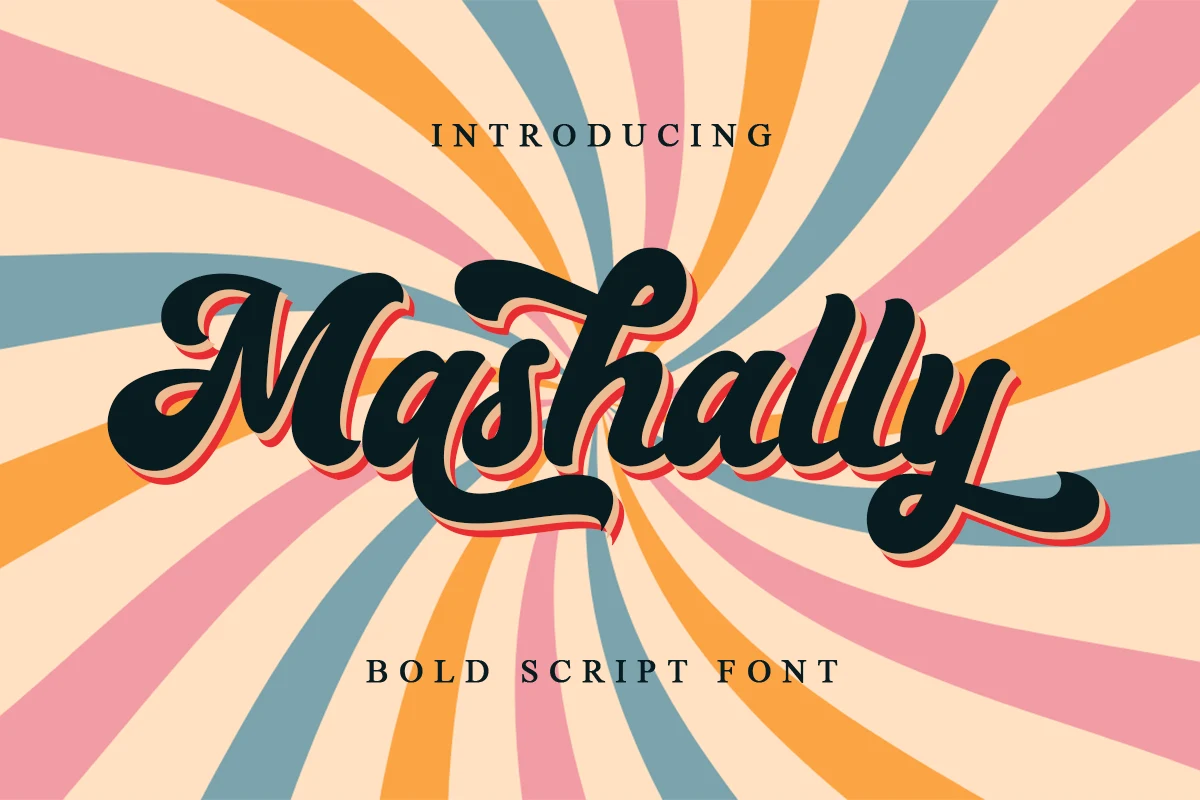
Best For: invitations, T-shirts, quotes, expressive designs
Mashally Font combines heavy weight, high contrast, rounded terminals, and tight connected joins for a retro calligraphic silhouette. Its substantial forms hold up on T-shirts, invitations, quotes, and greeting cards, but the swashes become harder to parse when reduced to very small sizes.
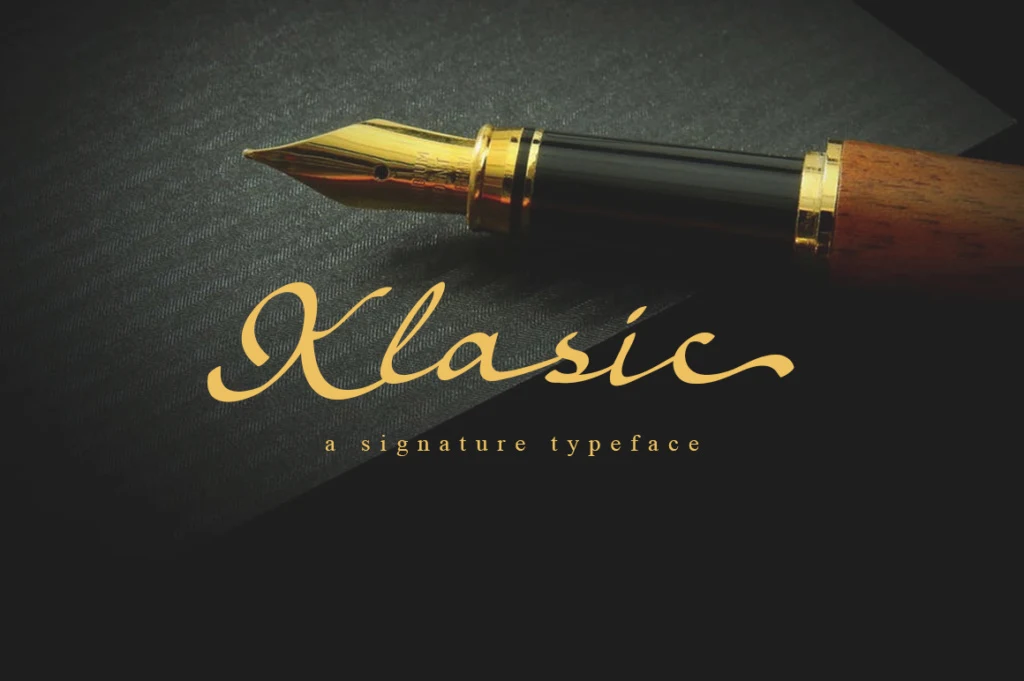
Klasic Script Font
Best For: display text, headlines, logos, branding
Klasic Script Font uses bold, high-contrast strokes to give connected lettering stronger headline presence than lighter pen-style scripts. Sweeping entry and exit swashes help it function as a signature or logo mark, while its dense construction calls for short wording at a generous display size.
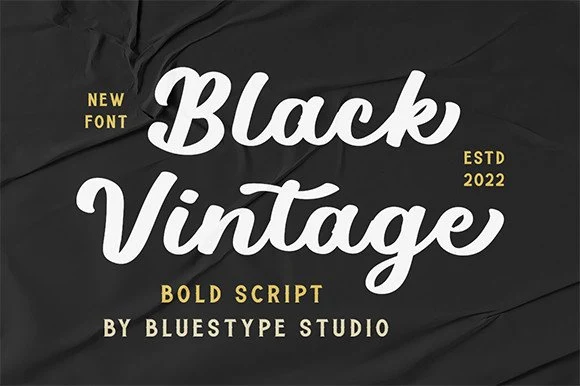
Black Vintage Font
Best For: logos, branding, display text, short phrases
Black Vintage Font takes a blunt route with consistent heavy stroke thickness, connected lowercase loops, and swash-like terminals. The stable weight supports logos, branding, display text, and short phrases more reliably than thin high-contrast scripts, although ornamental endings still need adequate size.
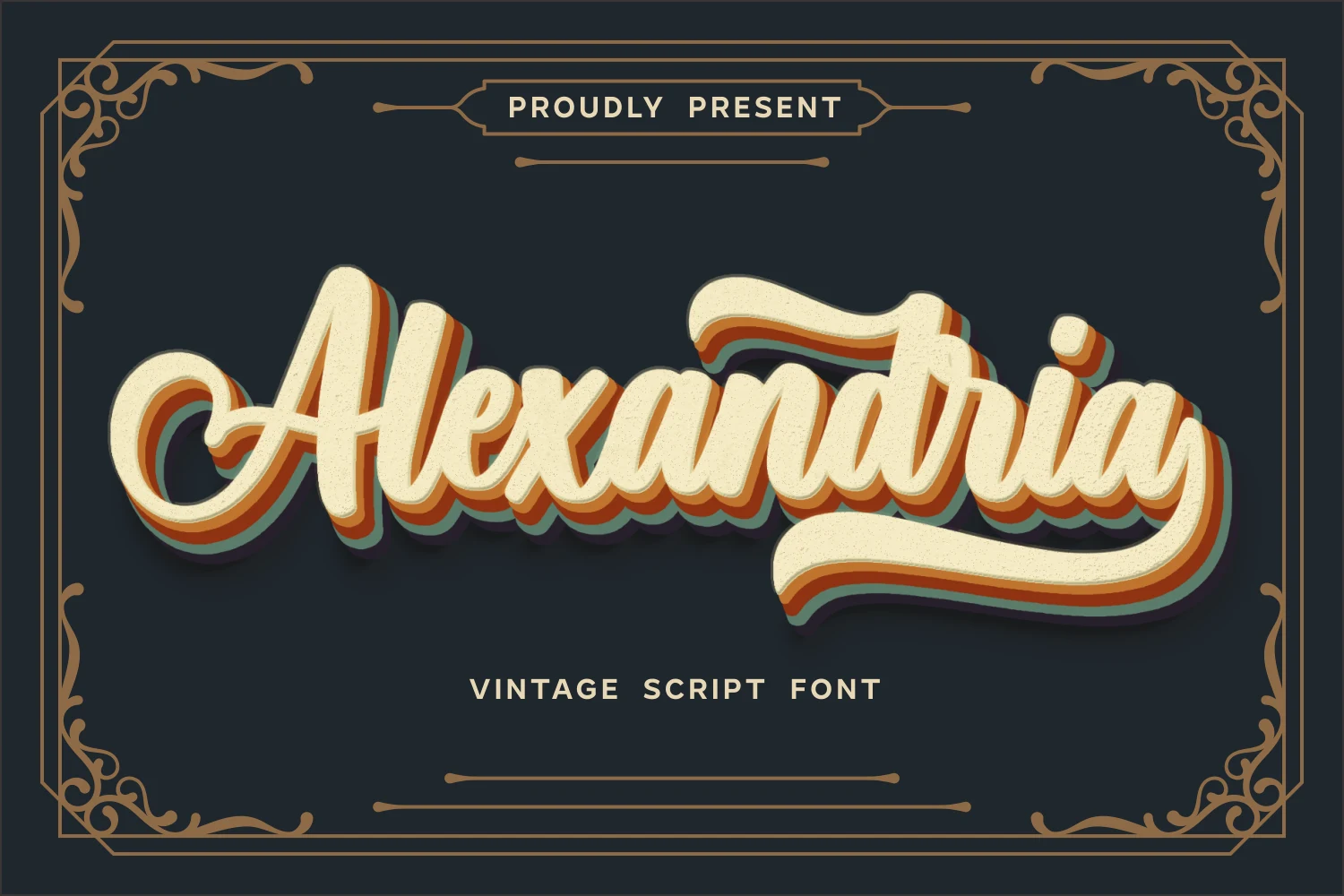
Alexandria Font
Best For: invitations, posters, display text, nostalgic designs
Alexandria Font separates itself through a multi-layered drop-shadow effect applied to connected, rounded script forms. The added layers create built-in poster depth for invitations, posters, and other display text, but they also make the font unsuitable for body copy or tightly set paragraphs.
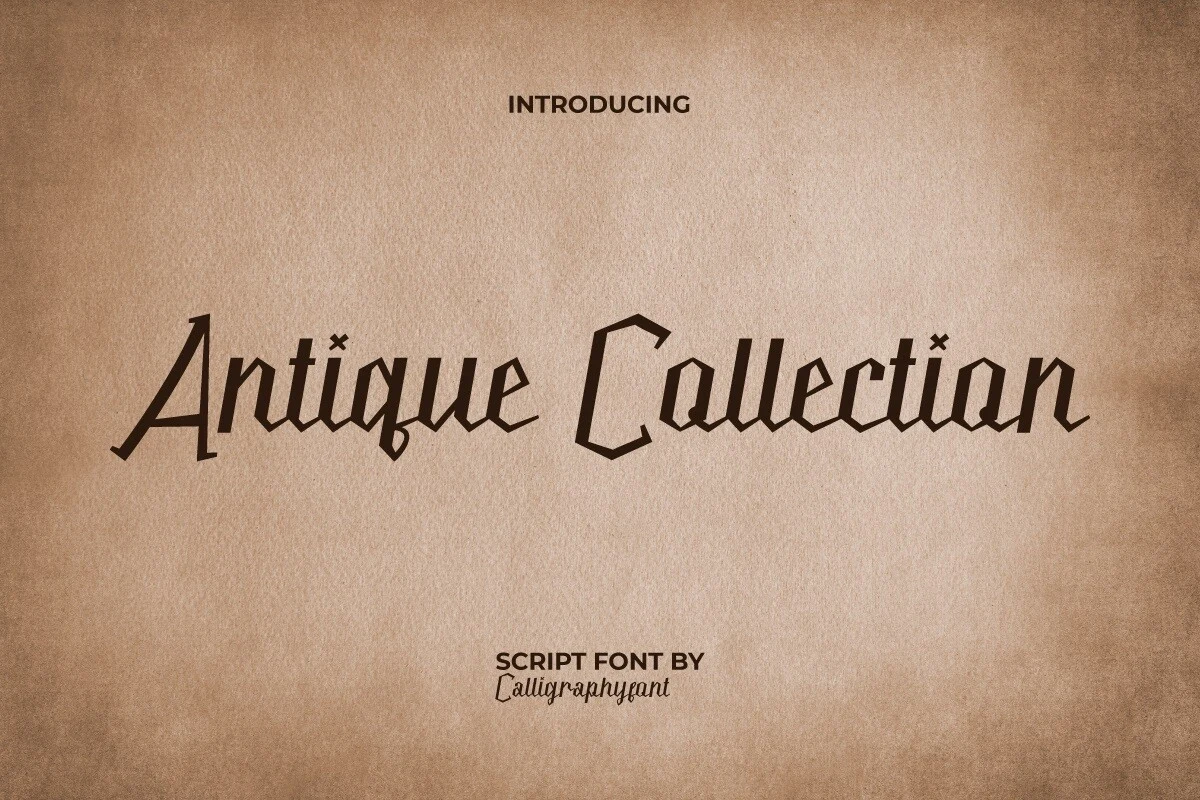
Antique Collection Font
Best For: logos, packaging, posters, display text
Antique Collection Font is an architectural outlier: its medium, consistent strokes form disconnected angular characters around a hexagonal structure. Sharp terminals stay clear at large sizes, making it effective for logos, packaging, posters, and display text, but it should not be treated as connected cursive.
How to Choose the Right Font
Choose by construction first: high-contrast scripts with joins and swashes need large, short wording, while monoline styles offer a calmer read. Use heavy scripts for stronger social or poster impact, irregular baselines for a signature feel, and the angular Antique Collection Font when connected Vintage Calligraphy Fonts would be too expected.